About
Tech for Change, Tech for Nature, and why this project matters for Cyprus.
What is Tech for Change?
Humans
Technology helps people live healthier, learn more, and work together.
Animals
We can protect wildlife and habitats with smart tools and data.
Nature
From forests to oceans, tech helps us care for our planet.
Tech for Nature

A Tech for Change focus area: how can technology help plants grow better in Cyprus?
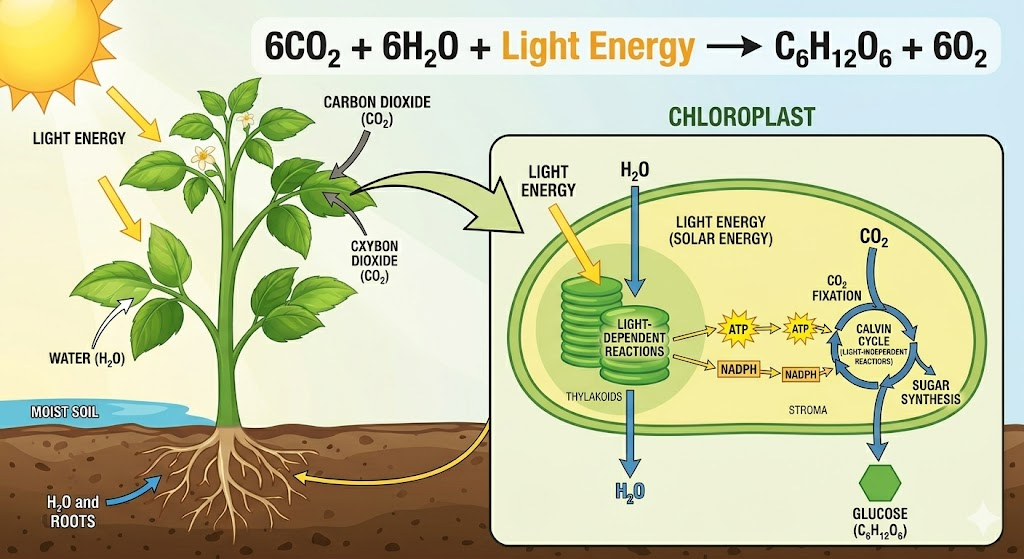
Tech for Nature is one part of Tech for Change. In this track, we use technology to protect plants, ecosystems, and our environment. Plants only grow well when four non-negotiable needs are balanced. If one is missing, growth slows down (Law of the Minimum).
- Light: the fuel for photosynthesis — plants turn solar energy into sugars for food
- Water: delivers nutrients, keeps cells firm, and carries minerals from roots to leaves
- Air: provides carbon dioxide — much of a plant's mass comes from carbon in the air
- Temperature: each plant has a safe "Goldilocks zone"; too cold or too hot stops growth
- Nutrients: nitrogen, phosphorus, and potassium act like vitamins for DNA and pigments
- Space: crowded plants compete for water and sunlight
- Soil: anchors roots and stores water and minerals like N, P, K
Plants grow differently because they are adapted to different climates. In Cyprus, we either choose climate-tolerant plants or create a controlled environment that protects them.
Why We Did This Project
The class did this to aid Cyprus with intense fires, especially during summer. Fires destroy the Cyprus ecosystem and nature, so we aim to replenish and replace plants that the fire took. That is why we learned about and designed a smart greenhouse — a safe zone to grow plants until they are strong enough to replant and help the land recover.
Definitions
- Greenhouse
- A glass or plastic structure that helps plants grow faster using the right temperature, good soil, and other ideal conditions that some places do not have naturally.
- Smart greenhouse
- A newer design with a fully automated system, controlled by a microcontroller (Arduino or micro:bit). It uses sensors for water, humidity, and air so materials and plants are not wasted.
- Microcontroller
- A small computer on a single circuit, used for small tasks and programming.
- Sensors
- Electronic devices that sense physical conditions (pressure, moisture, etc.) or chemical ones (gases). They send an electrical signal that becomes information about the environment.
- Ecosystem prototyping
- Shifting focus from a single object to the whole network — not just "a box with sensors" but a life-support system where every part depends on the others.
- Bud
- An undeveloped part of a plant (may become a leaf, shoot, or flower), growing at the stem tip or in a leaf axil.
- Stem
- Support for the plant; holds it upright and transports nutrients like a pipe network.
- Roots
- Organs that anchor the plant and deliver nutrients.
"A smart greenhouse isn't a success because the sensors work; it's a success because the plant survives, the data flows, and the user is in control."
Design reminder from the presentation: keep text readable, avoid dark-on-dark colours, and only add visual elements when they improve the message.
Why Cyprus Needs This
The water crisis
Precision irrigation gives water only when soil is actually dry, helping reduce waste by up to 47%.
Heat and fire threat
The greenhouse works like a climate shield, protecting plants from heat spikes and smoke-related stress. See Cyprus emergency & fire statistics on the Plants page.
Labor gap
Automation reduces constant manual checks so people do not need to work in extreme midday heat.
Food security
Stable indoor growing can improve crop output and support local vegetables even during drought periods.
Cyprus Emergency Call Data Insights
National statistics show that the 112 emergency infrastructure processes between 400,000 and 470,000 calls annually. Out of this daily volume of roughly 1,200 calls, a significant portion is routed directly to first responders.
The Cyprus Fire Service manages roughly 8,500 dispatches per year, maintaining a consistent daily baseline of 15 to 20 active fire incidents — split between urban municipalities (about 3,500 annually) and high-risk rural zones (about 5,000 annually).
Greenhouse assistant
Thinking…